
By Katie DiLorenzo, PharmD, SVP, Patient and Pharmacy Services and Austin Russian, PharmD, SVP, Program Excellence
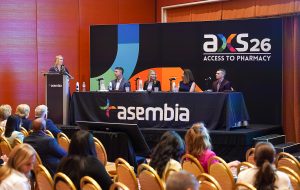 Every day, our work is guided by one question: how do we help people with rare diseases get the treatments they need so they can focus on living their lives, not navigating systems? At the same time, we have learned from nearly 50 rare disease launches that they are never one‑size‑fits‑all. Every program must be built differently and centered around the patient from the very start. That perspective shaped our conversation at Asembia’s ASX26 conference, where hope took center stage—not as a slogan, but as something that depends on how well we coordinate once innovation meets the real world.
Across perspectives from advocacy, manufacturing, specialty pharmacy, and access, the discussion consistently returned to three priorities that define successful rare disease launches today.
Key Takeaway #1: Hope reaches patients fastest when launch strategies are designed as living programs, not static milestones
In rare disease, launches are often treated as a moment. Patients experience them as a journey.
Panelists emphasized that approval alone does not ensure access. True launch excellence depends on thoughtful planning and operational readiness that can evolve in the real world.
As one panelist put it:
“We’re not just launching a product; we’re often launching a market. If our program looks the same on day one as it does six months later, we’re not doing something right, because we’re not learning.”
First‑in‑class therapies frequently require building disease awareness and educating prescribers and payers simultaneously.
Key Takeaway #2: Coordination isn’t fewer voices, it’s aligned voices
Rare disease care is inherently multi‑stakeholder and no one stakeholder can succeed in isolation.
One observation that resonated strongly:
“When coordination breaks down, patients become their own advocates, connecting dots the system never connects for them.”
We see on a daily basis that without clear ownership and real‑time communication, responsibility shifts to patients and caregivers, who are already carrying the weight of diagnosis, uncertainty, and long delays. Fragmentation doesn’t eliminate work; it redistributes it to the people least positioned to manage it.
Panelists repeatedly stressed that coordination works best when partnerships are transparent, accountable, and designed to act as a single team on behalf of patients.
Key Takeaway #3: Patient‑centered support models must be built from lived experience
Hope becomes meaningful only when patients feel understood, supported, and confident in what comes next. Patient advocacy organizations play a unique role, bringing lived experience that no dataset can replicate. As one panelist noted,
“Including advocacy gives you more insight than any form of market research ever will. ”
The panel underscored how critical it is to truly understand the patient journey—especially in rare disease, where moments that look ordinary on the surface can carry very different meaning for families. One point resonated throughout the discussion:
“If you treat every patient the same, you’re not hitting the mark.”
One anecdote shared by our advocacy partner really drove home the point that empathy and trust must be built into programs from the start, informed by real context—such as understanding what a family is carrying into a conversation. They shared that for some genetic conditions, birthdays can remind parents of the stress and anxiety of realizing their child was born with a rare disease. What many consider a happy milestone may be far more complicated than it appears.
At PANTHERx®, this isn’t theoretical for us. It’s personal. Every day, we meet patients and families who have already carried too much on their own. That understanding shapes how we show up: how we build support programs and how our RxARECARE® care teams communicate and educate. It’s why our teams get to know our patients as people and why we take the time to understand what a patient may be feeling in that exact moment—fear, relief, exhaustion, and yes, hope.