
By Courtney Nitkiewicz, PharmD, CSP, Clinical Patient Engagement Manager, and Abigail Jastrab, PharmD, BCPS, Director of Patient Engagement and Clinical Innovation, PANTHERx® Clinical Team
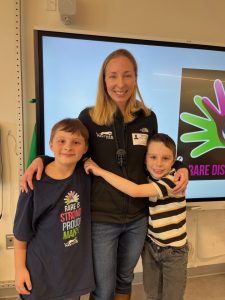 On Rare Disease Day, stripes are more than a pattern; they’re a reminder to look closer. What may seem familiar at first glance isn’t always what it appears to be, and in rare disease, that distinction can change a life. This year, we brought that idea to a second and third grade classroom, where curiosity, empathy, and a simple zebra picture helped spark meaningful conversations about why rare diseases are often missed, why awareness matters, and how anyone, at any age can be part of the change.
We began by explaining what Rare Disease Day represents and by breaking down the difference between common and rare diseases. When we shared that there are over 7,000 rare diseases, the room went quiet. The surprise grew when we explained that only 5% of rare diseases currently have approved treatment. Since the students are learning fractions and percentages, they immediately understood just how large the gap is.
One of the most powerful moments came toward the end of the presentation. We showed the students a silhouette and asked them to guess what animal it was. Almost every hand went up confidently with answers like “horse” or “donkey.” When we revealed that it was actually a zebra, there was surprise and recognition.
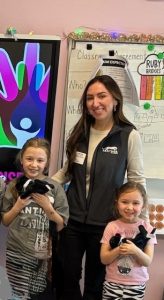 That’s when we explained why people wear stripes on Rare Disease Day.
In medicine, there’s a saying: “When you hear hoofbeats, think horses, not zebras.” While this makes sense most of the time, rare diseases are the zebras, often overlooked because they look like more common conditions at first glance. Just like the silhouette, many rare diseases can resemble common illnesses, which can lead to years of misdiagnosis or delayed treatment.
We also talked about heroism. We explained that each of them could be someone’s hero simply by being a thoughtful classmate or friend. If a child with a rare disease needs to play a game differently or needs extra understanding, inclusion becomes a form of advocacy.
As we left the classroom, it was clear this experience was impactful not just for the students, but for us as well. Rare disease awareness can start with a question, a silhouette, and a group of curious young minds.
It was a truly rewarding event, and we’re already looking forward to seeing the kids next year, and perhaps one day as future leaders in rare disease! Sometimes, seeing the zebra early can change everything.